
Fundamentals
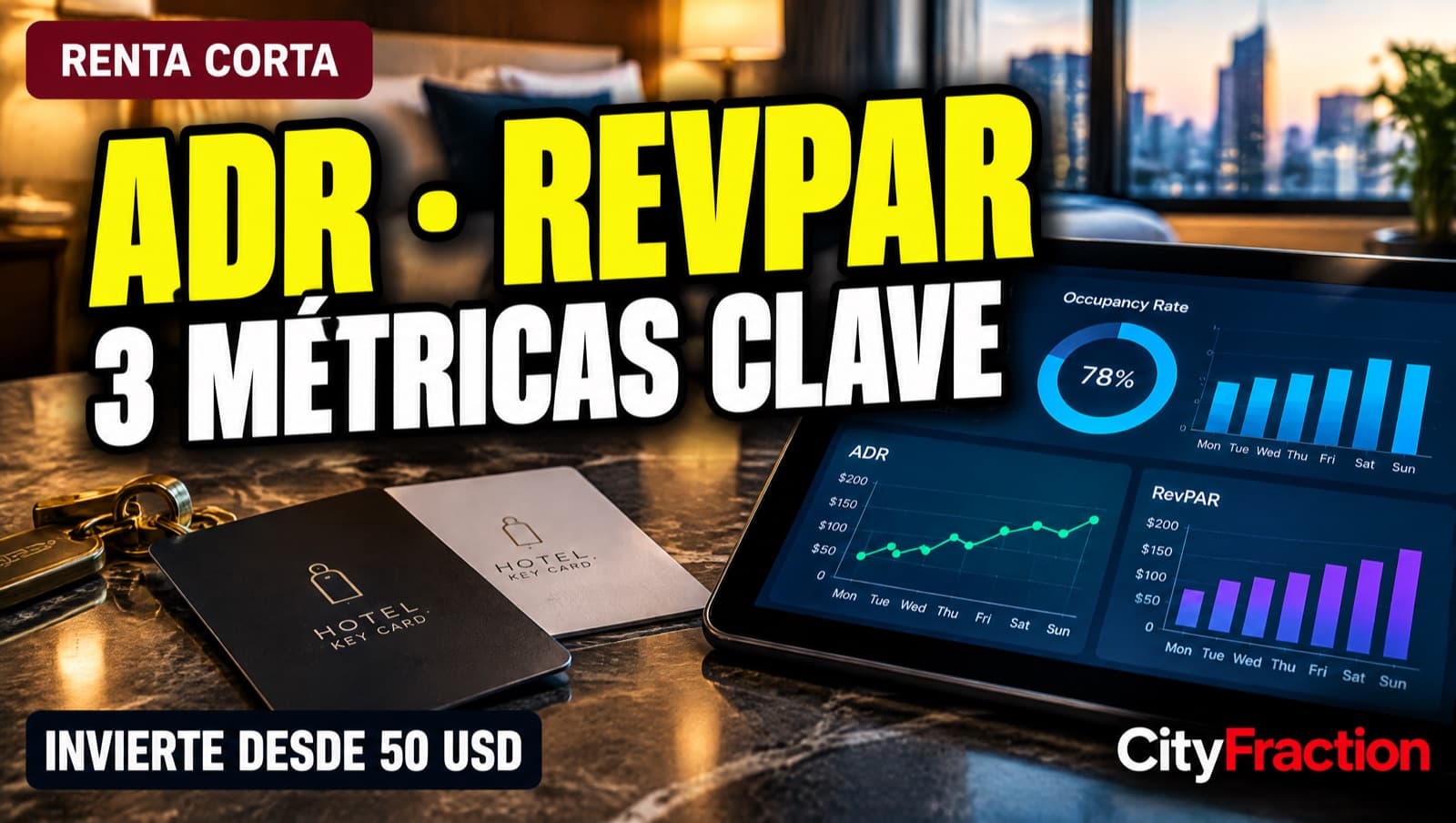
Occupancy, ADR, and RevPAR: the three short-term rent metrics
Before evaluating a lodging, you need to speak the language of hospitality. We explain the three main metrics with numerical examples.
November 12, 2026 4 min readCityFraction editorial team
Key points
- Occupancy measures what percentage of available nights were sold.
- ADR is the average rate per night sold.
- RevPAR combines both: income per available night, sold or not.
- Miami-Dade ranked third in average daily rate among the 25 largest hotel markets in the United States in 2024.
Infographic
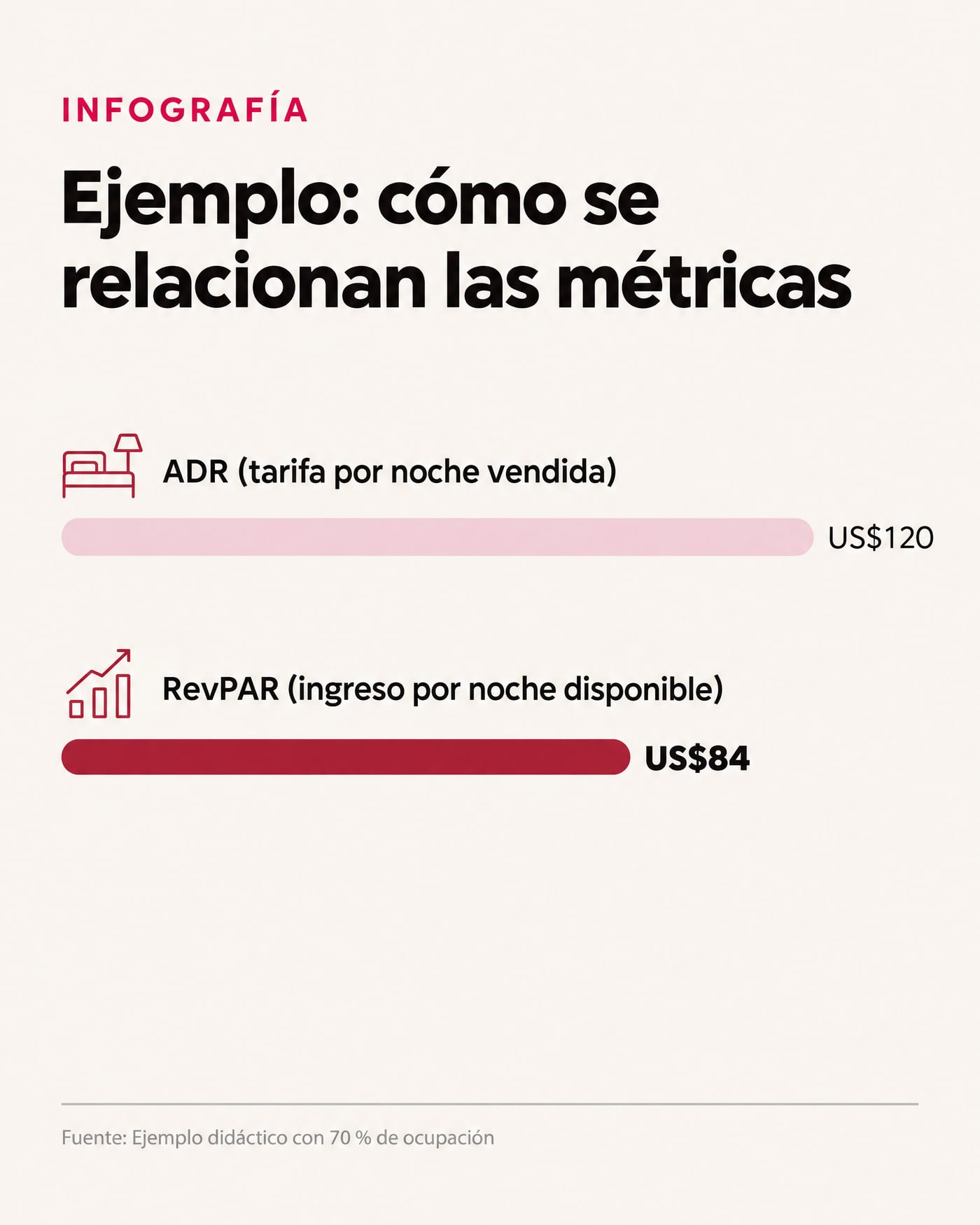
Example: how the metrics relate
View data in table
| ADR (rate per night sold) | US$120 |
| RevPAR (income per available night) | US$84 |
Source: Didactic example with 70% occupancy
Why measure with the same rules
The hotel industry has used three metrics for decades to compare the performance of lodging: occupancy, average daily rate (ADR), and revenue per available room (RevPAR). Short-term rentals adopted them because they allow comparing different lodgings with a common language.
Understanding them helps you read an asset's profile and know where its estimated profitability comes from.
1. Occupancy
It is the percentage of nights sold over the nights available in a period. If an apartment was available 30 nights in a month and 21 were sold, its occupancy was 70%.
High occupancy always seems good, but it can hide rates that are too low. That’s why it’s never looked at alone.
2. ADR: tarifa promedio diaria
ADR is the income per lodging divided by the nights sold. If those 21 nights generated $2,520, the ADR was $120. It measures the lodging’s pricing power.
According to the GMCVB, in 2024 Miami-Dade led hotel occupancy in Florida and ranked third in average daily rate among the 25 top hotel markets in the United States. It’s a sign of a destination with demand and pricing power.
3. RevPAR: the metric that sums it up
RevPAR is the income per lodging divided by all available nights, sold or not. It equals occupancy multiplied by ADR. In the example, $2,520 divided by 30 nights gives a RevPAR of $84, which is the same as 70% times $120.
It’s the preferred metric because it penalizes both empty nights and rates that are too low.
| Concept | Value |
| Available nights | 30 |
| Nights sold | 21 |
| Income per lodging | US$2,520 |
| Occupancy (21/30) | 70 % |
| ADR (2,520/21) | US$120 |
| RevPAR (2,520/30) | US$84 |
Educational example, does not correspond to a real asset.
From RevPAR to net rent
RevPAR measures gross income. To get what an investor receives, costs must be deducted: platform commissions, cleaning, laundry, supplies, maintenance, administration, insurance, taxes, and a reserve for contingencies. At CityFraction, the daily rent of each fraction is calculated on that net income, divided by the total fractions of the asset.
- Gross income: nights sold times rate.
- Less channel and operation commissions.
- Less fixed and variable asset costs.
- Less taxes and reserve.
- Equal to net income, prorated among the fractions.
How to use these metrics when investing
When comparing assets, ask what occupancy and ADR the estimated profitability assumes, if they are consistent with the market, and how they change between seasons. Be wary of projections with very high occupancies and high rates at the same time throughout the year: in practice, you usually have to choose between filling more nights or charging more for each one.
All investments carry risks, including capital loss. The returns of CityFraction assets are estimated and not guaranteed.
Other useful metrics
In addition to the three main ones, professional managers track other figures. Average stay indicates how many nights each booking lasts: longer stays reduce cleaning and turnover costs. Booking lead time shows how far in advance the calendar fills up and helps adjust prices. Average rating and number of reviews influence the listing’s visibility on platforms.
For the investor, none of these metrics alone tells if an asset is good. What matters is how they combine to produce sustainable net income throughout the year. That’s why it’s worth looking at the asset’s history, if available, and comparing its assumptions with those of the market in its city.
Conclusion
Occupancy, ADR, and RevPAR are the foundation for understanding any lodging. With them, you can ask better questions and read an asset’s profile critically before buying your fractions.
Frequently asked questions
What is ADR?
The average rate per night sold: lodging income divided by nights sold.
What is RevPAR?
Income per available night; equals occupancy multiplied by ADR.
Does my rent come from RevPAR?
It comes from the asset’s net income, after subtracting commissions, costs, taxes, and reserves.
Fonts
Public data consulted for this item. Figures may be updated after the consultation date.
- 1.Greater Miami Convention & Visitors Bureau: 2024 visitor record (Hotel Online) · consultado el October 12, 2026
- 2.CityFraction: frequently asked questions (fees, rents, and terms) · consultado el October 12, 2026
Learn how it works
The model, how to invest, and how to withdraw, step by step.
Conversation
What do you think of this article?
Educational content. Returns and figures are estimates or illustrative examples and do not constitute advice or guarantee. Read the risk information.