
Fundamentals
Diversify in four cities: Cartagena, Miami, Madrid, and Capri in numbers
We close the year with a comparison of the four markets where CityFraction operates and explain why diversifying among them is important.
October 28, 2026 4 min readCityFraction editorial team
Key points
- Miami-Dade received 28.3 million visitors in 2025; Madrid over 10.4 million travelers in 2024.
- Cartagena added nearly 851,000 international travelers in 2024 and southern Italy 57.6 million overnight stays.
- Each destination has its own currency, season, and regulations.
- Diversifying doesn’t eliminate risk, but it prevents relying on a single market.
Infographic
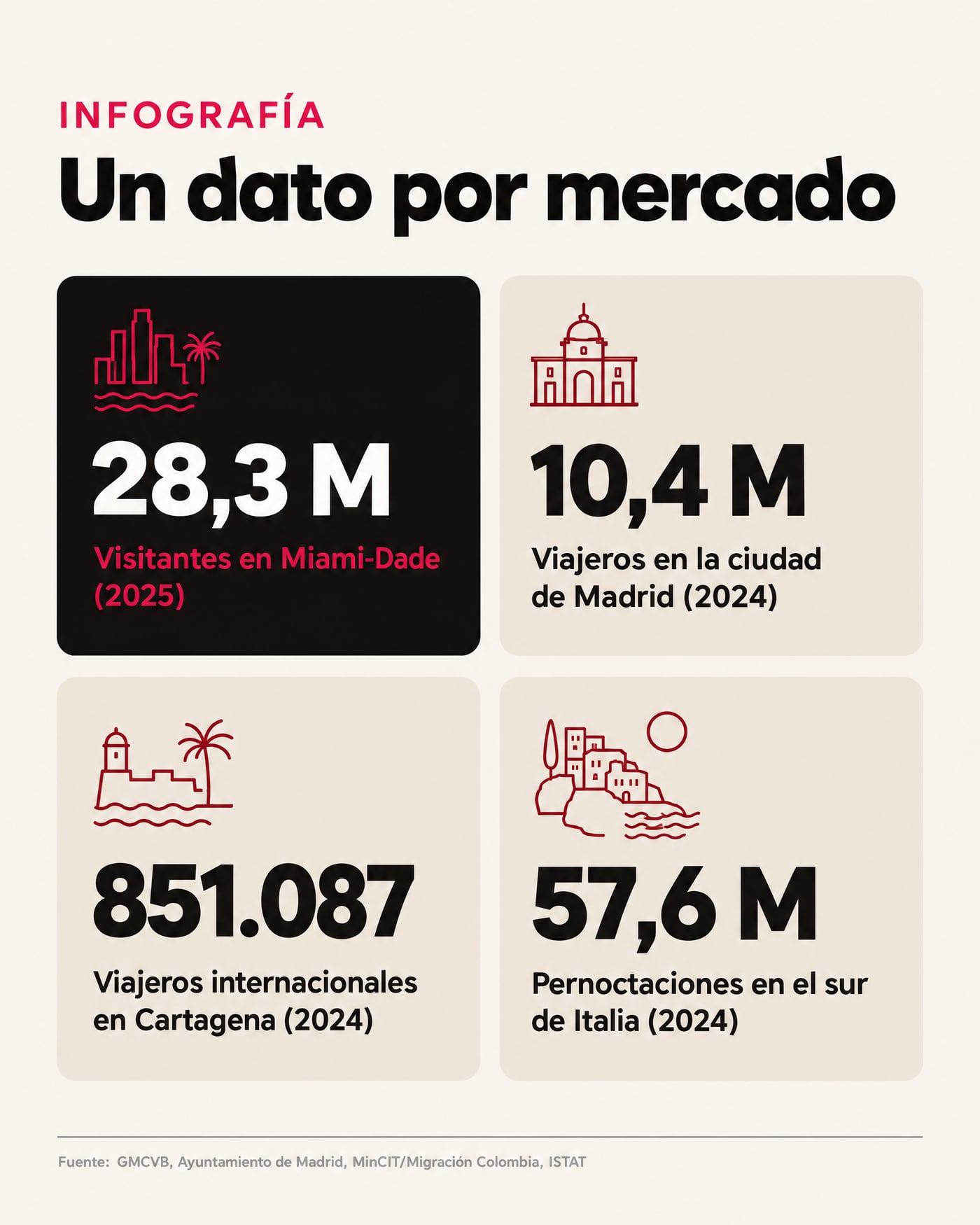
One fact per market
View data in table
| Visitors in Miami-Dade (2025) | 28,3 M |
| Travelers in the city of Madrid (2024) | 10,4 M |
| International travelers in Cartagena (2024) | 851.087 |
| Overnights in southern Italy (2024) | 57,6 M |
Source: GMCVB, Madrid City Council, MinCIT/Migración Colombia, ISTAT
Why not put everything in one place
The oldest investment rule is not to put all your eggs in one basket. In short-term rentals, this has a concrete meaning: each city has its own seasons, currency, regulations, and risks. A hurricane in Florida, a new rule in Spain, or a drop in tourism in Colombia affects one market, not necessarily all four.
CityFraction operates assets in Cartagena, Miami, Madrid, and Capri. Here are the latest tourism data for each.
The four markets in numbers
Miami-Dade received more than 28 million visitors in 2024 and 28.3 million in 2025, according to the GMCVB. The city of Madrid recorded over 10.4 million travelers and 20.9 million overnight stays in 2024, according to its city council. Cartagena received 851,087 non-resident international travelers in 2024, according to MinCIT and Migración Colombia figures. And southern Italy, where Capri is located, totaled 57.6 million overnight stays in 2024, according to ISTAT.
| Market | Data | Year |
| Miami-Dade | 28.3 million visitors | 2025 |
| Madrid (city) | 10.4 million travelers | 2024 |
| Cartagena | 851.087 viajeros internacionales | 2024 |
| Southern Italy | 57.6 million overnight stays | 2024 |
The figures use different methodologies and are not directly comparable.
Complementary seasons
High seasons do not coincide. Miami is strong in winter and spring, when northern United States and Europe are cold. Capri’s peak season is from spring to the end of the European summer. Cartagena concentrates demand in December, January, Easter, and mid-year holidays. Madrid has a more distributed demand thanks to business, fairs, and culture.
- Miami: winter and spring in the northern hemisphere.
- Capri: from spring to September.
- Cartagena: year-end, Easter, and mid-year vacations.
- Madrid: more stable demand throughout the year.
Different currencies
Assets operate in US dollars, Colombian pesos, and euros. For a Colombian investor, earning in dollars and euros diversifies against peso devaluation. For someone from the US or Europe, Cartagena offers exposure to an emerging market. Exchange rates are also a risk: they can move in your favor or against you.
Different regulations
Spain requires a single registry for short-term rentals starting July 2025. Italy requires the CIN code from 2024. Colombia requires the National Tourism Registry for tourist housing. Miami-Dade and its municipalities have their own licensing and tax rules. Diversifying also spreads regulatory risk.
All investments carry risks, including capital loss. The returns of CityFraction assets are estimated and not guaranteed.
Also diversify by asset type
Besides spreading across cities, you can combine asset types. Short-term rentals depend on tourism and seasons. Rental cars in Miami depend on travel and resident mobility demand and have other risks like depreciation and accidents. Each type responds differently to the economy.
A portfolio mixing cities, currencies, and asset types doesn’t rely on a single factor. There’s no perfect combination: the right mix depends on your goals, how long you can wait, and how much risk you’re willing to take. Starting small and learning over time is a reasonable approach.
How to start diversifying
With fractions from 50 USD, you don’t need hundreds of thousands of dollars to have exposure in four cities. You can start with one asset and add others over time, reinvesting part of your daily income. Always review each asset’s profile, estimated returns, and risks.
Frequently asked questions
Which cities does CityFraction operate in?
In Cartagena, Miami, Madrid, and Capri, with short-term rentals and rental cars.
Does diversifying eliminate risk?
No. It reduces it by not relying on a single market, but each asset still has its own risks.
How much do I need to invest in multiple cities?
Fractions start at 50 USD, so you can spread small amounts across several assets.
Fonts
Public data consulted for this item. Figures may be updated after the consultation date.
- 1.El Espectador: Miami registers tourism record and Colombia leads among foreign visitors (2025) · consultado el October 12, 2026
- 2.Madrid City Council: tourism situation report, December 2024 · consultado el October 12, 2026
- 3.Minuto60: Cartagena, historic record of international visitors (MinCIT and Migración Colombia figures) · consultado el October 12, 2026
- 4.ISTAT: Tourist Flows, year 2024 · consultado el October 12, 2026
Explore open properties
Accommodations with fractions from 50 USD.
Conversation
What do you think of this article?
Educational content. Returns and figures are estimates or illustrative examples and do not constitute advice or guarantee. Read the risk information.