
Short-term rental
Investing in properties in Madrid as a foreigner
Madrid is the gateway to Europe for many Latin Americans. We explain what buying a property as a foreigner entails, how tourism regulations have changed, and how to invest with small amounts.
October 4, 2026 6 min readCityFraction editorial team
Key points
- A foreigner can buy property in Spain but needs NIE, notary, registration, and must comply with tax obligations as a non-resident.
- Spain eliminated the residence visa for real estate investment (golden visa) in 2025; buying does not grant residency rights.
- Madrid has tightened rules for tourist rentals, especially in the Centro district: not every property can be listed on Airbnb.
- Fractions allow exposure to tourist accommodations in Madrid from 50 USD, without purchase procedures in Spain.
- Income in euros diversifies against the peso and dollar but adds currency risk.
Why Madrid interests Latin American investors
Madrid is the political and economic capital of Spain and one of the most visited cities in Europe. Its cultural offerings (the Prado, Reina Sofía, Thyssen), gastronomy, and football are complemented by IFEMA fairs, congresses, and headquarters of major companies, bringing business travelers year-round.
For Latin Americans, there is also cultural closeness: the language is the same, there are direct flights from several regional capitals, and many families have ties to Spain. Investing there is also a way to hold assets in euros, a currency different from the peso and dollar.
The city also has less seasonal demand than beach destinations. On weekdays, business travelers and congress attendees arrive; on weekends, national and international tourists; and major sports and music events fill the city on specific dates. This mix does not eliminate slow months but softens them.
What a foreigner needs to buy a property in Madrid
Spain does not prohibit foreigners from buying property, but the process has several steps. You need an NIE (foreigner identification number), usually a Spanish bank account to pay and domicile expenses, sign the deed before a notary, and register the purchase in the Property Registry. If financing with a mortgage, banks usually require more documents and a higher down payment than for residents.
When buying, you pay taxes and notary, registration, and management fees. Afterwards, each year, you have obligations as a non-resident: income tax on rents you collect (or even just for owning the property if you don’t rent it out), municipal property tax, and depending on your wealth, other taxes. Rates and rules change, so a tax advisor in Spain is advisable.
- NIE and, in practice, a Spanish bank account.
- Deed before a notary and registration in the Property Registry.
- Purchase taxes and closing costs.
- Annual declarations as a non-resident.
The end of the golden visa
For years, buying property above a certain amount in Spain allowed applying for a residence visa by investment. That program was eliminated in 2025. Today, buying property in Spain does not grant residency, and those wishing to move must seek another immigration route.
This changes the investment logic: you no longer buy to obtain residency but for the return and diversification the asset can provide.
Buying fractions on CityFraction does not grant any residence permit or immigration benefit either.
Tourist apartments: increasingly strict regulation
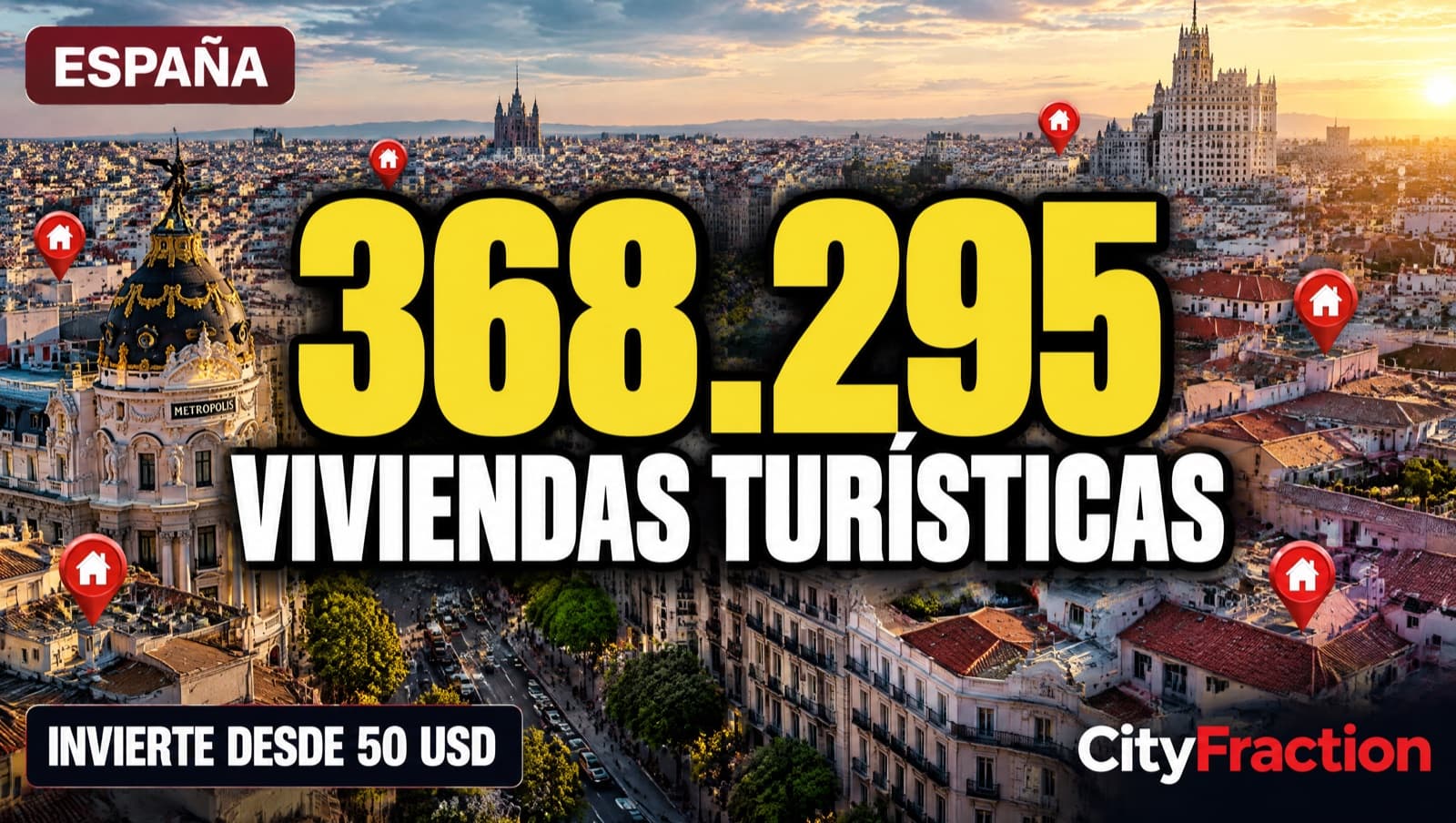
The Madrid City Council has restricted new tourist-use homes, especially in the Centro district, and requires licenses and specific conditions, such as independent access in many cases. Spain has also created a national registry of short-term rentals. Many homeowners' associations can also limit the activity in their buildings.
For those buying an apartment with the idea of listing it on Airbnb, this means that buying alone is not enough: you must verify if that specific property can operate as a tourist accommodation. For accommodations already operating with their license or in hotel format, the regulation means less new competition. But it is also a risk: the rules may continue to change.
Direct purchase vs. fractions
With fractions you don’t buy the apartment in your name: you acquire economic rights over the net income of a specific accommodation. That’s why you don’t need NIE or a notary for the purchase, you start with 50 USD, and you can split your capital between Madrid and other cities. In return, you don’t decide about the property nor capture all its appreciation as a sole owner would.
| Aspect | Buying an apartment | Buy fractions |
| Minimum amount | The price of the apartment plus expenses | 50 USD per fraction |
| Procedures in Spain | NIE, notary, registry, bank account | None for purchase |
| Tourist license | You handle or verify it | Managed by the accommodation operator |
| Guest management | Yours or an operator you hire | From the operator |
| Diversification | Concentrated in one property | Distributed among assets and cities |
| Exit | Selling the property | Secondary market or instant sale |
Educational summary. Costs, taxes, and conditions depend on each case.
What to look for in a tourist accommodation in Madrid
Before investing in any accommodation in the city, whether buying an apartment or fractions, it’s good to check a few things. The first is the format it operates in: a licensed tourist-use home, a tourist apartment within a dedicated building, or a room in a hotel establishment do not carry the same regulatory risks. The second is the location relative to what guests seek: leisure travelers want to walk to the center; business travelers prefer to be near Castellana, IFEMA, or a good metro and train connection.
The third is the reviews. Competition in Madrid is huge, and guest ratings largely determine occupancy and the rate that can be sustained. An accommodation with hundreds of reviews and a good score has a track record worth more than any promise. Finally, look at costs: cleaning, laundry, utilities, community fees, insurance, platform commissions, and local taxes. All are deducted before income is distributed.
- Format and regulatory status of the accommodation.
- Location versus guest type.
- Number of reviews and rating.
- Breakdown of costs and estimated net profitability.
Madrid accommodations on CityFraction
Today there are accommodations in two areas with different profiles. Suites You Gran Vía is downtown, where leisure tourism concentrates: theaters, shopping, museums, and nightlife. Sercotel Togumar Chamartín is in the north of the city, near Paseo de la Castellana, Santiago Bernabéu stadium, and Chamartín station, with more business and event demand.
Each listing includes photos, guest ratings, nightly rates, estimated finances, and a simulator. Spring and fall tend to be the strongest seasons; in midsummer, heat and local vacations change the type of demand.
Risks and How to Consider Them
The main risks of a tourist accommodation in Madrid are regulatory changes, competition from hotels and other lodgings, seasonality, rising costs, and fluctuations of the euro against your currency. None are completely eliminated, but they can be diversified: combine Madrid with destinations in different seasons and always review the breakdown of each listing.
And remember, if you are a tax resident in your country, you usually must declare the income you receive from your fractions. Consult with your advisor.
Frequently asked questions
Can a foreigner buy property in Madrid?
Yes. You need an NIE, sign before a notary, register the purchase in the Property Registry, and fulfill your tax obligations as a non-resident.
Does buying property in Spain grant residency?
No longer. Spain eliminated the residence visa for real estate investment in 2025.
Can I list any apartment in Madrid on Airbnb?
No. Madrid requires a license and conditions for tourist-use homes and restricts new ones in the Centro district; additionally, the homeowners association can limit it.
Do I need an NIE to buy fractions of accommodation in Madrid?
No. You buy fractions from your CityFraction account, with no purchase procedures in Spain.
Explore open properties
Accommodations with fractions from 50 USD.
Conversation
What do you think of this article?
Educational content. Returns and figures are estimates or illustrative examples and do not constitute advice or guarantee. Read the risk information.