Short-term rental
Investing in Capri: Vacation Rentals in Italy
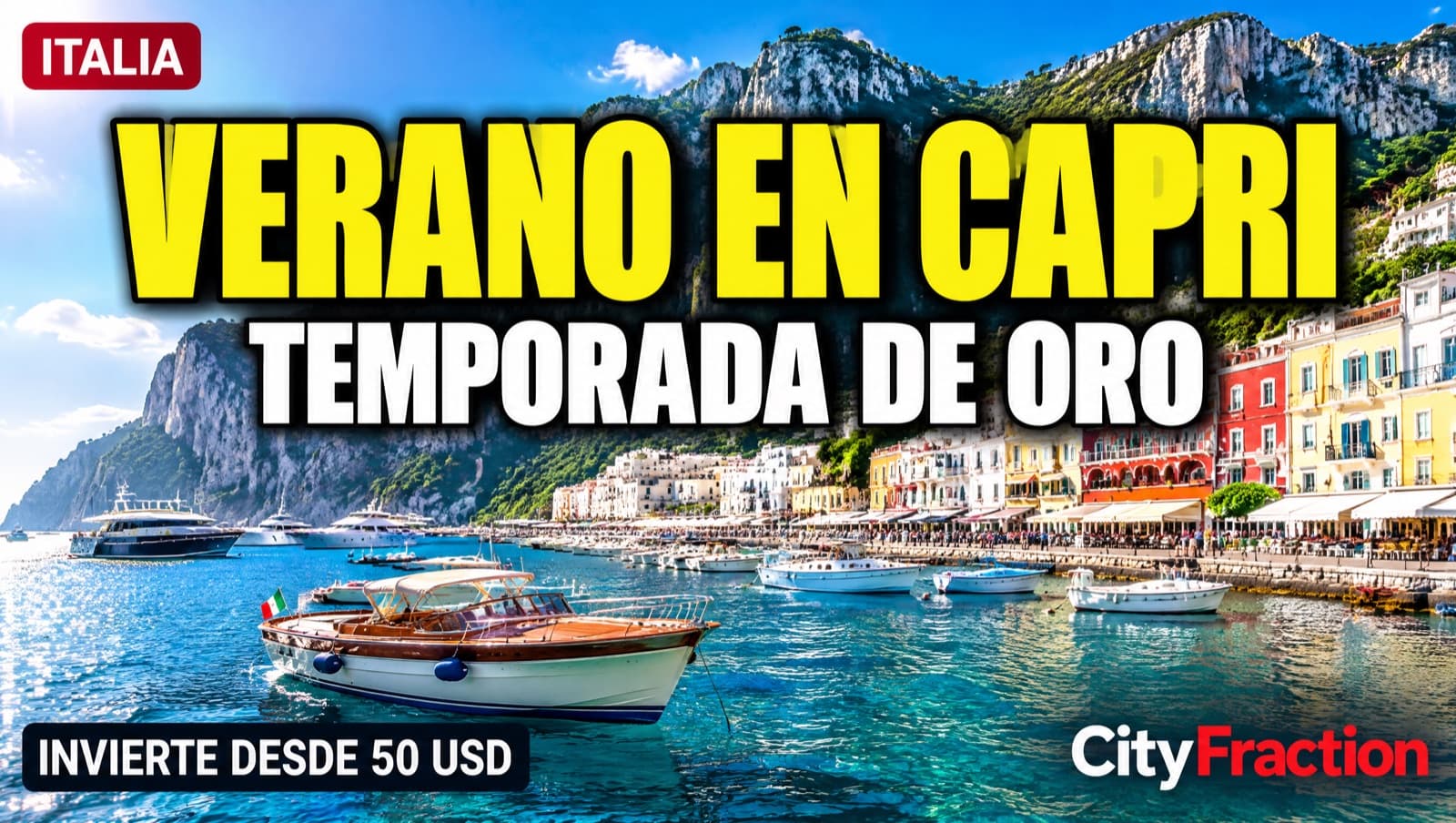
Capri is one of the most exclusive destinations in the Mediterranean and its lodging supply is very limited. We analyze how its vacation market works, what risks it has, and how to participate with small amounts.
October 2, 2026 6 min readCityFraction editorial team
Key points
- Capri is a small island with very limited lodging supply and international demand from high-net-worth individuals.
- Income is concentrated between spring and early autumn; in winter activity drops significantly.
- Operating on an island is more costly: transport, supply, cleaning, and maintenance weigh more.
- Italy requires a national identification code (CIN) for tourist rentals and municipalities charge a stay tax.
- With fractions you can have exposure to Capri from 50 USD, without buying or operating a property in Italy.
Capri: a destination with limited supply
Capri is in the Gulf of Naples, opposite the Sorrento peninsula. It is a small island, with two municipalities (Capri and Anacapri), much protected land, and a landscape that does not allow large developments. This scarcity is the basis of its appeal for an investor: there are few beds available in a destination listed on the travel itinerary of tourists worldwide.
Its clientele includes European and American travelers with high purchasing power, honeymoon couples, and visitors who combine the island with the Amalfi coast, Pompeii, or Naples. Many come just for the day, but those who stay overnight seek charming accommodations, views, and good service.
A seasonal market
Tourist activity in Capri is concentrated between spring and early autumn. In those months ferries arrive full and rates reach their highest point. In winter many hotels, restaurants, and shops reduce their operation or close. For an investor, this has a direct consequence: monthly rent varies greatly and the full year's result must be evaluated, not just one month.
Seasonality is not bad in itself; it is a characteristic. The important thing is to know it in advance so as not to interpret a slow January as a sign that something is wrong.
| Quarter | Share of annual net income |
| January to March | 5 % |
| April to June | 35 % |
| July to September | 50 % |
| October to December | 10 % |
Made-up percentages to illustrate seasonality of a summer destination. They do not correspond to real data from any lodging.
Island logistics: why operations matter so much
Capri is reached by ferry or hydrofoil from Naples and Sorrento, and in season also from other coastal points. Bad weather can suspend crossings, affecting arrivals, departures, and supplies. Cleaning, laundry, repairs, and supplies cost more than on the mainland, and staff must be carefully planned for the season.
That’s why, for a Capri asset, the quality of the local operator matters as much as the location. A good operator maintains reviews, handles weather cancellations, and keeps the lodging in good condition in a salty, humid environment.
The type of lodging also matters. Capri has many small family hotels and bed and breakfasts with few rooms, where personal attention and breakfast with a view weigh heavily in reviews. Maintaining that standard requires a team present on the island throughout the season.
Italian regulations for tourist rentals
Italy introduced a mandatory national identification code (CIN) for tourist and short-term rentals, which must appear in listings. Additionally, municipalities charge a tourist tax to guests, and there are safety requirements and guest data reporting to authorities. For tax purposes, income from short-term rentals has its own regime that has changed in recent years.
Foreigners buying property directly in Italy must obtain a codice fiscale, sign before a notary, and comply with non-resident tax obligations. As in Spain, it’s possible but requires local advice.
- CIN code visible in every listing.
- Municipal tourist tax charged to guests.
- Reporting guest data to authorities.
- Specific tax regime for short-term rentals.
Buying in Capri versus buying fractions
Properties in Capri are among the most expensive in Italy, and beyond paying the price you must handle island operations, regulations, and non-resident taxation. For most investors, owning a property in Capri is not realistic.
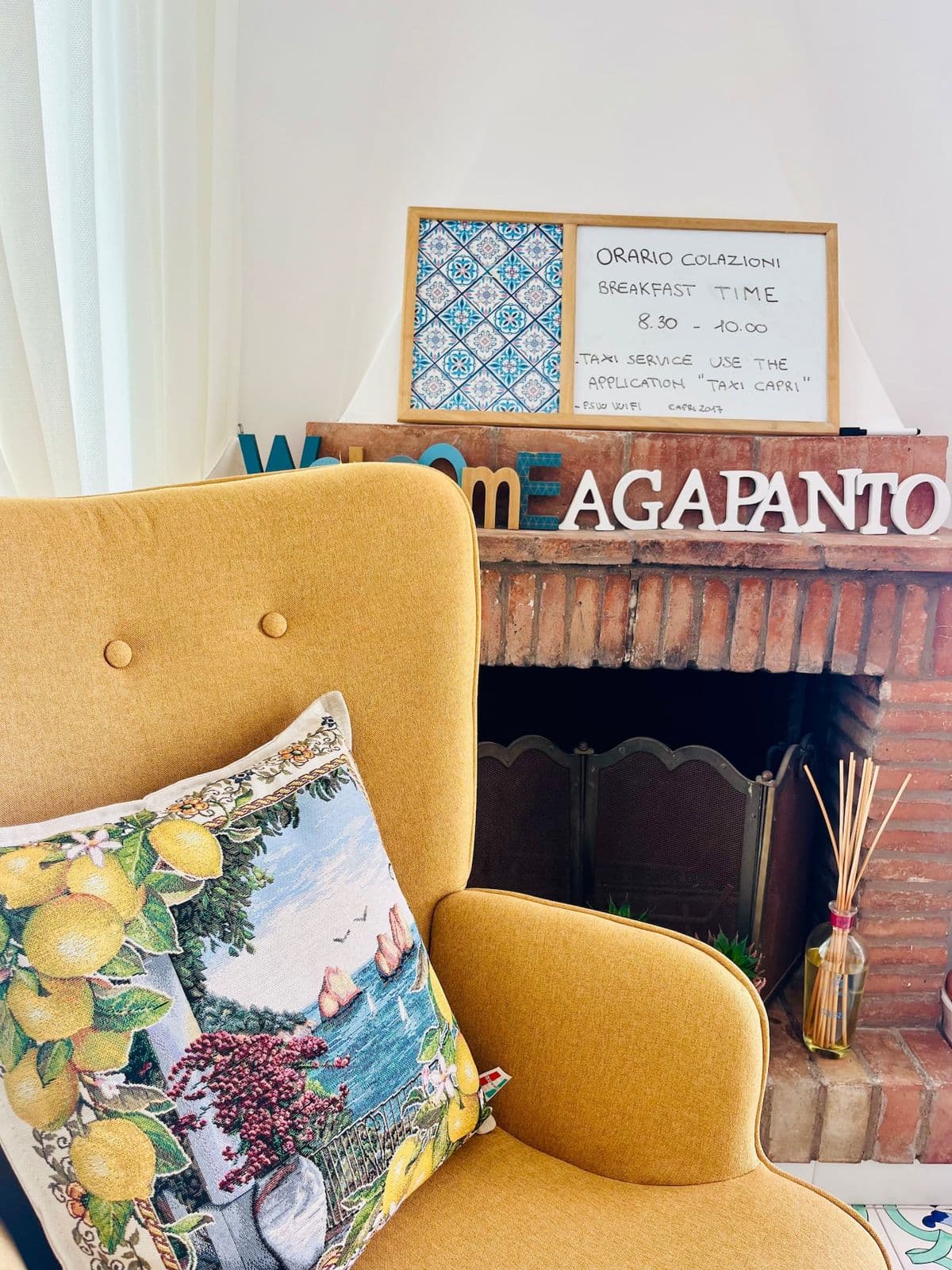
With fractions the approach changes: you buy a part of a lodging that already operates, starting at 50 USD, and receive your share of net income. You don’t decide on the property or capture all its appreciation, but you don’t need a large capital or manage anything in Italy. On CityFraction the available asset is L'Agapanto, a B&B in Anacapri.
How Capri fits in a portfolio
A common mistake is to evaluate each asset separately and always choose the one with the highest estimated return. In practice, it’s better to think of the whole. A seasonal asset like Capri generates most of its income between spring and early fall; an urban lodging like those in Madrid or Miami has demand spread more evenly throughout the year; one in the Colombian Caribbean peaks in December, Easter, and mid-year. Combining them makes total income more stable than any one alone.
Capri also adds currency and country diversification. Its income is in euros and depends on European and US tourist demand, which doesn’t always move in sync with Latin American demand. So rather than ask if Capri is the best investment, ask what part of your portfolio you want in a high-end European vacation asset.
| Asset | Profile | Share of amount |
| Urban lodging in Madrid | Demand all year, euros | 35 % |
| Accommodation in Miami | Tourism and business, dollars | 35 % |
| Accommodation in Cartagena | Caribbean, pesos | 20 % |
| Accommodation in Capri | Summer season, euros | 10 % |
Distribution invented just to illustrate the idea of combining profiles. This is not a recommendation: your distribution depends on your goals and risk tolerance.
What return to expect
A luxury destination has high nightly rates, but also high costs and few months of peak season. The net result is usually more moderate than the rates suggest. That’s why the asset sheet shows an estimated annual return with its breakdown of income and expenses, and it’s worth reading carefully.
Capri works well as a complement: a European vacation asset, in euros, alongside urban accommodations with more even demand throughout the year, like those in Madrid or Miami.
No return is guaranteed. Income from a seasonal asset can vary greatly from year to year due to weather, transportation, or demand changes.
Frequently asked questions
Why invest in Capri and not in a city?
Because its supply is very limited and its international demand is high. It’s a seasonal asset that complements urban accommodations.
Do I receive rent in winter?
There may be income, but much lower than in high season. What is distributed each day depends on the actual net income of the accommodation.
Do I need a codice fiscale to invest with fractions?
No. You buy fractions from your CityFraction account, without purchase procedures in Italy.
What is the CIN?
The national identification code that Italy requires for tourist and short-term accommodations, which must appear in their listings.
Can I stay in the Capri accommodation?
Yes. It is booked on CityFraction Accommodations at the normal rate, independently of your investment.
Explore open properties
Accommodations with fractions from 50 USD.
Conversation
What do you think of this article?
Educational content. Returns and figures are estimates or illustrative examples and do not constitute advice or guarantee. Read the risk information.