

Risks
Vacancy: the silent rental risk and how it is measured
A vacant property generates no income but does incur costs. We explain what vacancy is, how it is measured, and how it is managed.
November 18, 2026 3 min readCityFraction editorial team
Key points
- The rental vacancy rate in the United States was 6.9% in the fourth quarter of 2024.
- The vacancy of owned homes was 1.1% in that quarter.
- A vacant property still pays taxes, maintenance, and insurance.
- In short-term rentals, vacancy is measured night by night and managed with price and channels.
Infographic
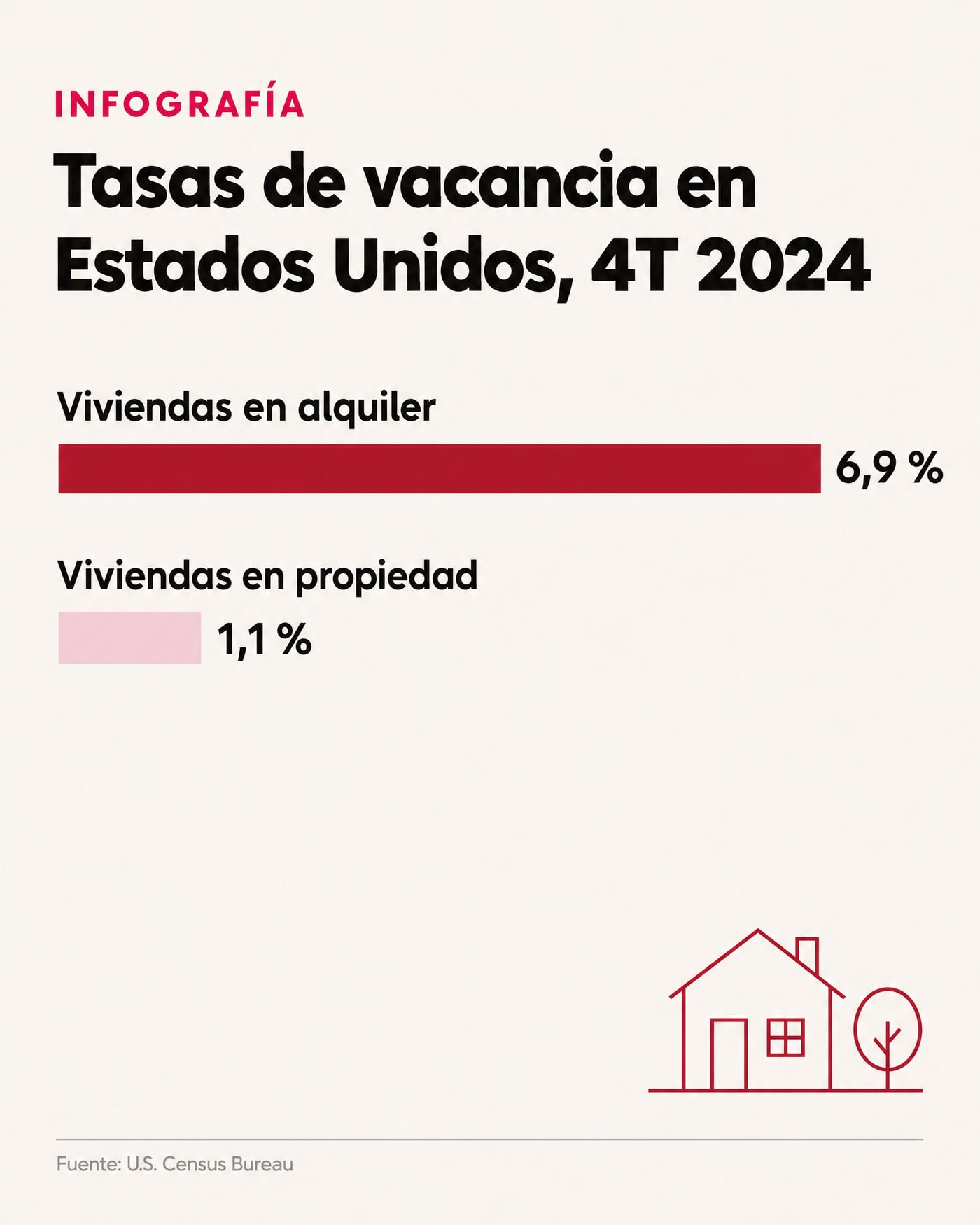
Vacancy Rates in the United States, Q4 2024
View data in table
| Rental Homes | 6,9 % |
| Owned homes | 1,1 % |
Source: U.S. Census Bureau
What is vacancy
Vacancy is the time or proportion that a property intended for rent is unoccupied. It is the inverse of occupancy: if an apartment is rented 10 out of 12 months, its vacancy was two months. During that time it generates no income, but its fixed costs continue: taxes, insurance, administration, and maintenance.
That is why vacancy is one of the most important, and sometimes least visible, risks of any real estate investment.
United States Data
The United States Census Bureau publishes the vacancy and homeownership survey every quarter. According to their report, the rental vacancy rate was 6.9% in the fourth quarter of 2024, and the homeownership vacancy rate was 1.1%. One year later, in the fourth quarter of 2025, neither had changed in a statistically significant way.
| Indicator | Rate |
| Rental Housing Vacancy | 6,9 % |
| Homeownership Vacancy | 1,1 % |
Source: U.S. Census Bureau, Housing Vacancies and Homeownership.
Vacancy in Traditional Renting
In long-term renting, vacancy occurs between one tenant and the next: weeks or months to find someone, plus repair time. A long lease provides stability, but when it ends, the property can remain empty and income drops to zero suddenly.
Also, if the tenant stops paying, the owner may face a lengthy process before regaining the property.
Vacancy in Short-Term Renting
In short-term renting, vacancy is measured night by night: it’s the percentage of unsold nights. It’s more variable because it depends on the season, but also more manageable: dynamic pricing, presence on multiple platforms, and flexible minimum stays help fill nights that would otherwise be empty.
- Adjust rates according to demand and booking lead time.
- List on multiple channels to avoid dependence on one.
- Accept medium-length stays in low season.
- Maintain good reviews, which affect visibility.
- Keep the property in good condition to avoid closures.
How It Reflects in a Fraction
At CityFraction, the daily rent of each fraction is proportional to the asset’s actual net income. If there are vacant nights, that day’s rent is lower or zero, while the asset’s fixed costs continue to be covered. That’s why the estimated return of each share includes an expected occupancy, which is not guaranteed.
All investments carry risks, including capital loss. The returns of CityFraction assets are estimated and not guaranteed.
How to Assess Vacancy Risk
When reviewing an asset, compare the occupancy assumed in its estimated return with that of its market and history, if available. Ask how it performs in low season, how many channels it depends on, and what the plan is if demand falls. An asset with realistic assumptions and active management usually weathers difficult months better.
Diversification also helps: with fractions in multiple assets, one’s vacancy is partially offset by others’ occupancy.
Conclusion
Vacancy is inevitable in any rental property but can be measured and managed. Understanding it helps you realistically interpret an asset’s return and avoid confusing possible income with guaranteed income.
Frequently asked questions
What Is the Vacancy Rate?
The proportion of rental homes that are unoccupied; in the United States, it was 6.9% in the fourth quarter of 2024.
Does Short-Term Renting Have Vacancy?
Yes, measured as unsold nights; it varies with the season and is managed with pricing and channels.
If My Asset Has Vacant Nights, Do I Receive Rent?
The rent for that day will be lower or zero because it’s calculated based on the asset’s actual net income.
Fonts
Public data consulted for this item. Figures may be updated after the consultation date.
- 1.U.S. Census Bureau: Housing Vacancies and Homeownership, fourth quarter 2025 · consultado el October 12, 2026
- 2.CityFraction: frequently asked questions (fees, rents, and terms) · consultado el October 12, 2026
Explore open properties
Accommodations with fractions from 50 USD.
Conversation
What do you think of this article?
Educational content. Returns and figures are estimates or illustrative examples and do not constitute advice or guarantee. Read the risk information.