

Risks
Italy and the CIN code: what changed in tourist rentals
Italy created a national code for each short-term rental accommodation. We explain how the CIN works and why it matters in destinations like Capri.
October 31, 2026 4 min readCityFraction editorial team
Key points
- The CIN was introduced with Decree Law 145/2023 as a measure against informality and tax evasion.
- It is issued by the Ministry of Tourism through a national database and replaces regional codes.
- It must be displayed outside the building and in every listing.
- Failure to have the code is penalized with fines; compliance is part of the asset's value.
Infographic
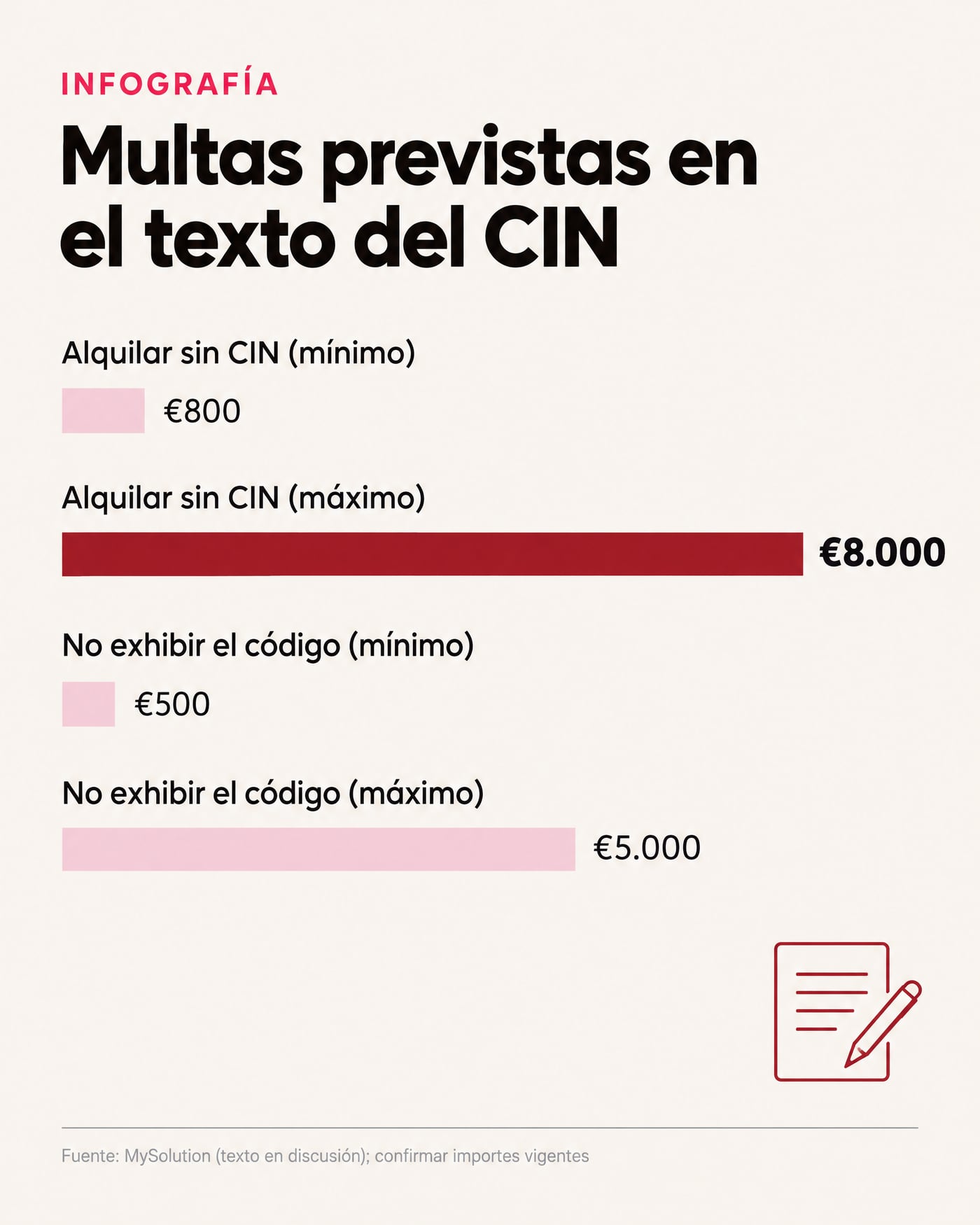
Fines provided in the CIN text
View data in table
| Renting without CIN (minimum) | €800 |
| Renting without CIN (maximum) | €8.000 |
| Not displaying the code (minimum) | €500 |
| Not displaying the code (maximum) | €5.000 |
Source: MySolution (text under discussion); confirm current amounts
One code for each accommodation
Italy introduced the Codice Identificativo Nazionale (CIN) through an amendment to the so-called Anticipi Decree, Decree Law 145 of December 18, 2023. The goal is to uniquely identify each property rented for short periods to tourists, combat informality, and improve tax control.
The code replaces regional codes that some regions had already created and unifies the system nationwide.
How to obtain it
The CIN is assigned by the Ministry of Tourism through a national database of lodging structures. The owner or manager submits an online application, which for individuals requires declaring the cadastral data of the property. The mandatory dates were staggered between late 2024 and early 2025, depending on the region and the platform's launch time.
Once assigned, the code must be displayed on the exterior of the building where the apartment is located and appear in every listing published on platforms or websites.
Penalties
The regulation provides fines for those renting without a code and for those who do not display it. According to legal analyses published during the discussion of the text, fines for operating without a CIN could range from 800 to 8,000 euros, depending on the size of the structure, and fines for not displaying it from 500 to 5,000 euros. As legal texts are adjusted, it is advisable to confirm current amounts with a local advisor.
| Aspect | Details |
| Origin regulation | Decree Law 145/2023 |
| Who issues it | Ministry of Tourism (national database) |
| Where it is displayed | Outside the building and in every listing |
| Fine without CIN (text under discussion) | 800 a 8.000 euros |
| Fine for not displaying it (text under discussion) | 500 a 5.000 euros |
Sources: Cose di Casa and MySolution. Confirm current amounts with local advisory.
Why Italy tightened the rules
Italy experienced its best tourist year in 2024: ISTAT recorded 139.6 million arrivals and 466.2 million overnight stays. In highly visited cities and destinations, the growth of short-term rentals caused tensions over housing access and competition with hotels. The CIN is the State's response to understand the real size of the supply and control its taxation.
It's the same trend seen in Spain with the unique registry and in Colombia with the National Tourism Registry: more data, more control, and more formality.
Capri, a special case
On an island like Capri, the accommodation supply is limited by geography and strict urban and landscape regulations. This means existing accommodations have high demand in season, but also that any regulatory change has significant effects. An asset in Capri must have all its permits in order: CIN, municipal authorizations, and tax compliance.
- Verify that the accommodation has its assigned and visible CIN.
- Check municipal and regional authorizations.
- Consider seasonality: the high season runs from spring to September.
- Keep in mind the euro and fixed costs throughout the year.
Risks
Regulatory risk is real across Europe. New rules may limit activity, raise taxes, or require additional investments. Professional management and diversification across countries help mitigate it, but do not eliminate it.
All investments carry risks, including capital loss. The returns of CityFraction assets are estimated and not guaranteed.
Conclusion
The CIN does not prohibit short-term rentals: it makes them traceable. For investors, the message is to choose formal assets with managers who understand local regulations. Always check the regulatory status on each CityFraction asset's profile.
Frequently asked questions
What is the CIN in Italy?
The Codice Identificativo Nazionale, a unique code that short-term rental accommodations must have starting in 2024.
Who issues the CIN?
The Ministry of Tourism, through a national database.
Where must the code appear?
Outside the building where the accommodation is located and on every published listing.
Fonts
Public data consulted for this item. Figures may be updated after the consultation date.
- 1.Cose di Casa: short-term rentals, CIN obligation kicks in · consultado el October 12, 2026
- 2.MySolution: new obligations for short-term rentals and penalties · consultado el October 12, 2026
- 3.ISTAT: Tourist Flows, year 2024 · consultado el October 12, 2026
Explore open properties
Accommodations with fractions from 50 USD.
Conversation
What do you think of this article?
Educational content. Returns and figures are estimates or illustrative examples and do not constitute advice or guarantee. Read the risk information.