
Trends
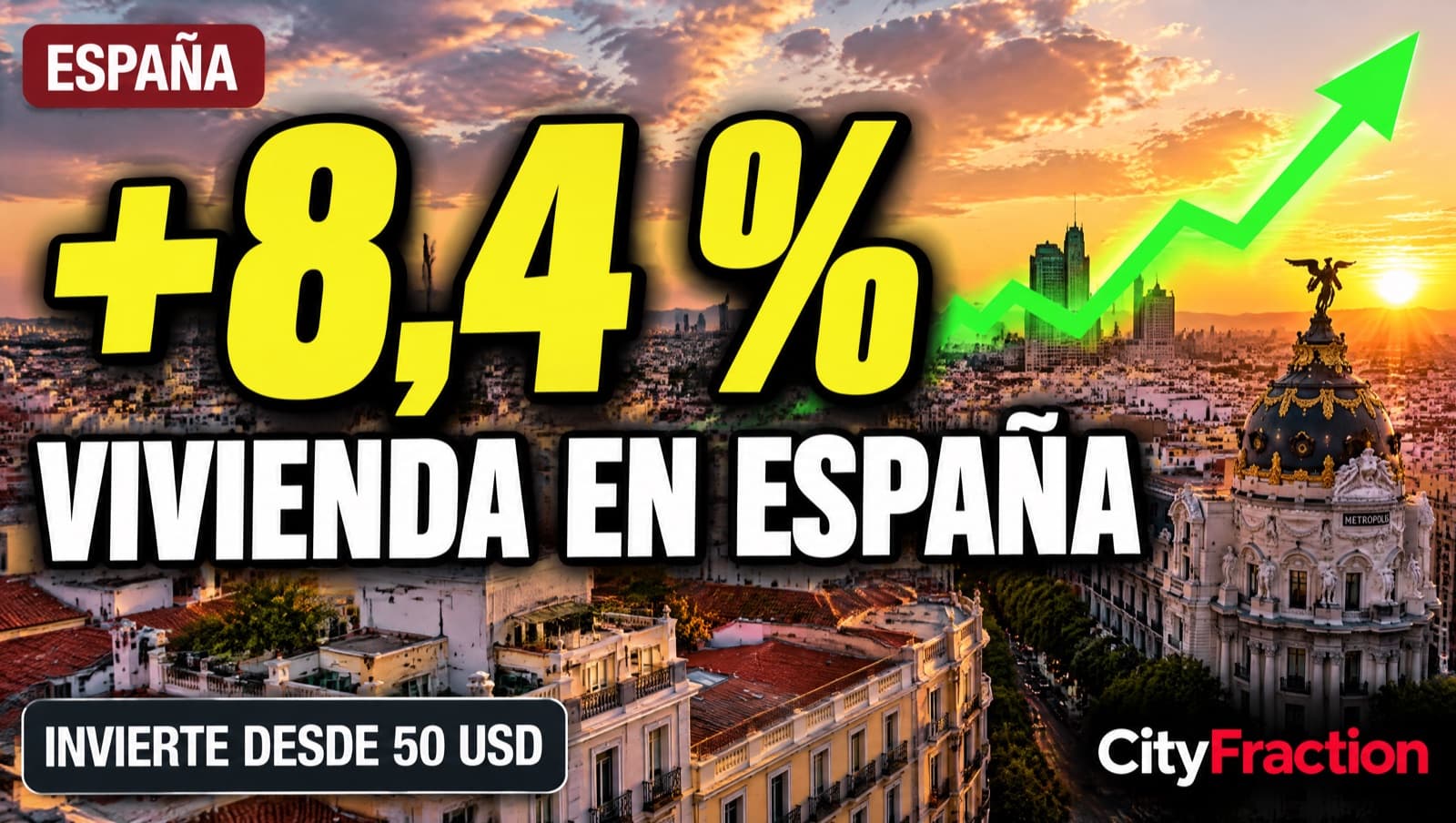
Housing in Spain rose 8.4% in 2024: what it means for investing
The INE housing price index marked its biggest rise in 17 years in 2024. We analyze what’s behind it and how to interpret it.
October 25, 2026 4 min readCityFraction editorial team
Key points
- The price of free-market housing in Spain rose 8.4% in 2024, its biggest increase since 2007, according to the INE.
- New housing rose 10.9% and second-hand housing 8.0%.
- In the fourth quarter of 2024, the annual rate reached 11.3%.
- High prices mean more wealth for those who already own a home, but also more difficulty buying a whole one.
Infographic
Housing prices in Spain, 2024
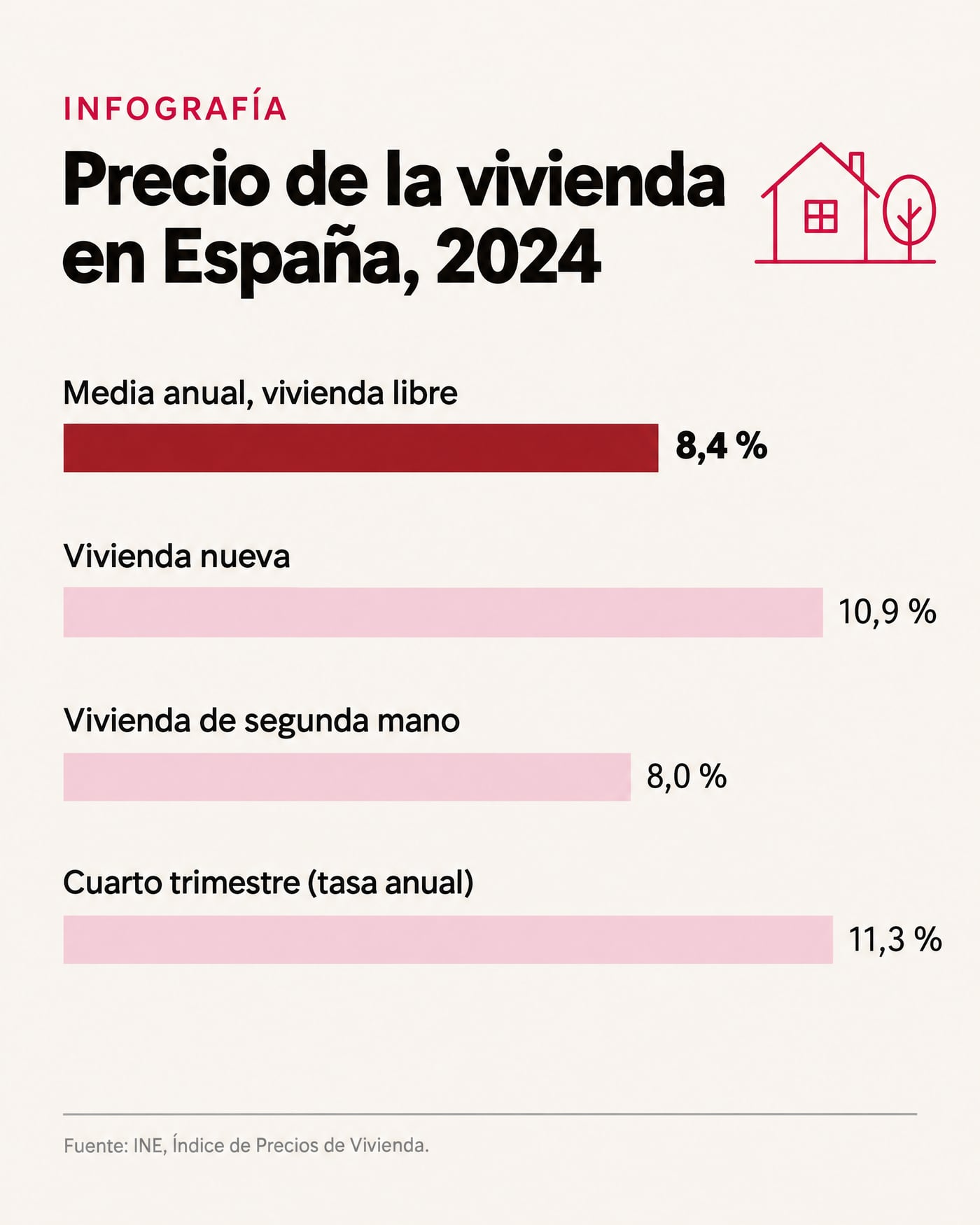
View data in table
| Annual average, free housing | 8,4 % |
| New housing | 10,9 % |
| Second-hand housing | 8,0 % |
| Fourth quarter (annual rate) | 11,3 % |
Source: INE, Housing Price Index
The biggest increase in 17 years
According to the National Institute of Statistics (INE), the price of free-market housing in Spain rose by an average of 8.4% in 2024, more than double that of 2023 and the largest increase since 2007, when it grew by 9.8%. It was also the eleventh consecutive year of increases.
By type of housing, new homes rose 10.9%, their largest increase since 2007, and second-hand homes 8.0%, also the largest since that year.
A year that accelerated
The increase grew throughout the year. The annual rate of the index was 6.3% in the first quarter, 7.8% in the second, 8.1% in the third, and 11.3% in the fourth. That last figure is a variation compared to the same quarter of the previous year, not the annual average, which is why it does not match the 8.4%.
| Quarter | Annual rate |
| 1T 2024 | 6,3 % |
| 2T 2024 | 7,8 % |
| 3T 2024 | 8,1 % |
| 4T 2024 | 11,3 % |
| Yearly average | 8,4 % |
Source: INE, IPV 2024 press releases.
What explains the increase
Behind the rise are several known factors: a supply of new housing that does not meet household formation, population growth, demand from foreign buyers, and tourism, which competes for the use of homes in major cities. At the same time, the European Central Bank’s interest rate cuts starting in 2024 made credit cheaper compared to 2023.
These same pressures explain the tightening of regulations on tourist rentals, which aim to free up housing for residents.
What it means for an investor
Higher prices increase the value of existing properties but reduce rental yield on a new purchase because more is paid for the same income. That’s why in expensive markets, management makes the difference: good occupancy, well-calculated rates, and controlled costs.
Buying a whole home in Madrid requires very high capital. Fractions allow participation with small amounts in assets that already generate income, and to combine several markets.
- Past appreciation does not guarantee future appreciation.
- Rental yield = annual net income divided by asset value.
- In expensive markets, regulation and management weigh more.
Risks of the Spanish market
The main risk for short-term rentals in Spain is regulatory: the single rental registry, urban planning rules of each city, and restrictions from homeowners’ associations. There is also the risk of price correction if interest rates change or the economy cools.
All investments carry risks, including capital loss. The returns of CityFraction assets are estimated and not guaranteed.
Rental yield versus appreciation
It’s useful to separate the two sources of return on a property. Appreciation is the increase in its price, which only materializes upon sale. Rental yield is the annual net income divided by the asset’s value. In a fast-rising market, the latter tends to fall because prices grow faster than rents or rates.
That’s why just looking at the headline that housing rose 8.4% is not enough. A prudent investor asks how much net income the asset generates today, how much it costs to maintain, and what would happen if prices stabilize. This is the information shown on each asset’s profile in CityFraction, always as an estimate and not a promise.
In short
The Spanish real estate market experienced in 2024 its biggest increase since before the 2008 crisis. It is a market with strong demand and limited supply, but also more regulation. Analyze each asset with its license, occupancy, and costs.
Frequently asked questions
How much did housing rise in Spain in 2024?
An 8.4% annual average, according to INE, the largest increase since 2007.
Did new or used housing rise more?
New rose 10.9% and second-hand 8.0%.
Is rising prices good for investing?
Increases the value of what you already have, but reduces profitability from renting new purchases. It depends on each asset.
Fonts
Public data consulted for this item. Figures may be updated after the consultation date.
- 1.INE: Housing Price Index, fourth quarter 2024 · consultado el October 12, 2026
- 2.Finect: housing prices rise 8.4% in 2024, the biggest increase since 2007 (INE data) · consultado el October 12, 2026
Explore open properties
Accommodations with fractions from 50 USD.
Conversation
What do you think of this article?
Educational content. Returns and figures are estimates or illustrative examples and do not constitute advice or guarantee. Read the risk information.