

Short-term rental
Easter and seasons: how to read hotel occupancy in Colombia
Easter Week is one of the peak seasons for domestic tourism. We explain how hotel occupancy is measured and what the data shows.
November 11, 2026 4 min readCityFraction editorial team
Key points
- National hotel occupancy averaged 50.3% between January and October 2024, compared to 51.8% in 2023.
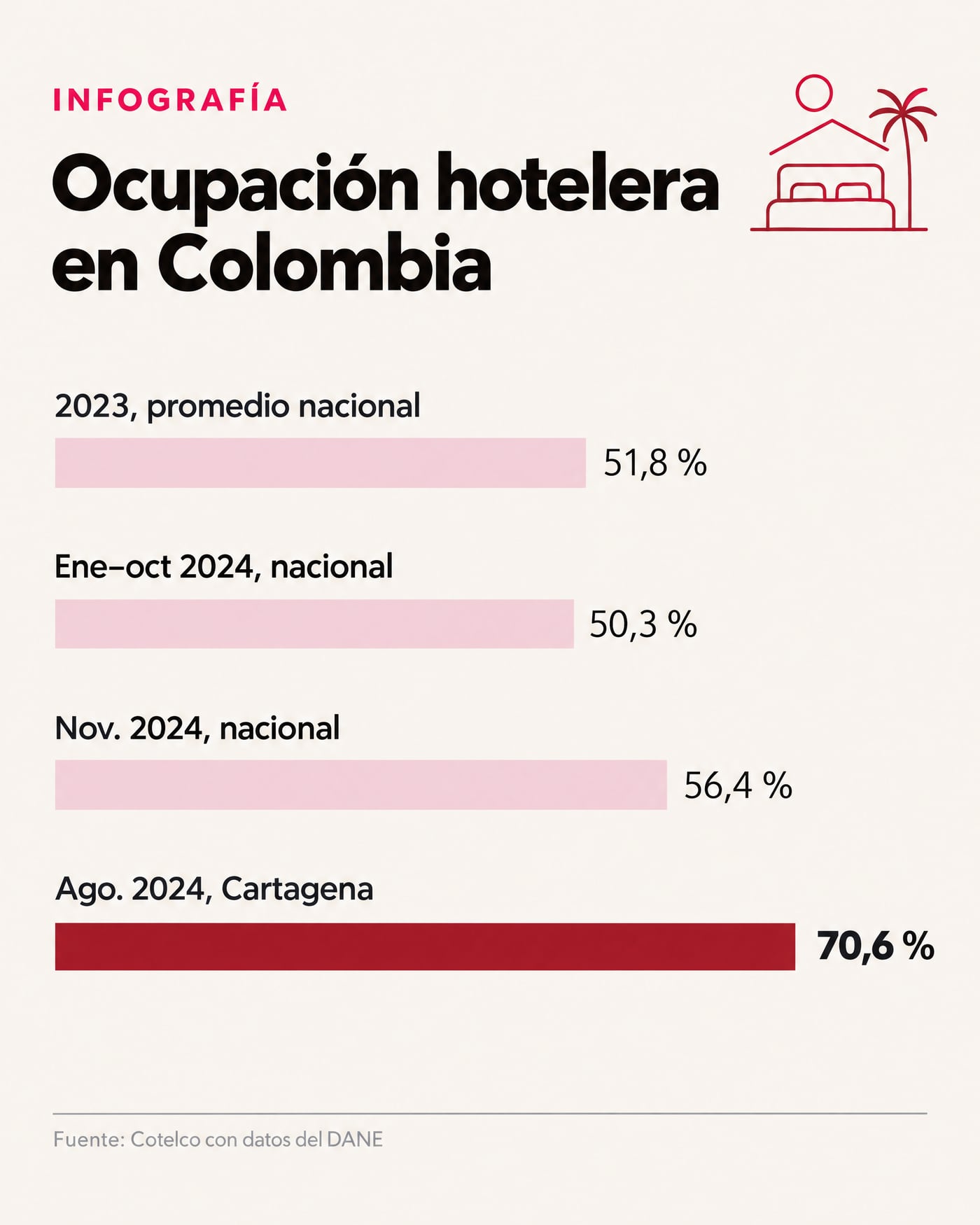
- In November 2024 it was 56.4%, and Cartagena reached 70.6% in August.
- DANE and Cotelco measure occupancy using different methodologies, which is why their figures do not match.
- Seasons concentrate demand: the daily rent of a fraction reflects these variations.
Infographic
Hotel occupancy in Colombia
View data in table
| 2023, promedio nacional | 51,8 % |
| Jan–Oct 2024, national | 50,3 % |
| Nov. 2024, national | 56,4 % |
| Aug. 2024, Cartagena | 70,6 % |
Source: Cotelco with data from DANE
Colombian tourism seasons
Domestic tourism in Colombia has very distinct seasons: year-end and January, Easter Week, mid-year vacations, and long weekends. During these periods, beach destinations and cities with cultural offerings fill their hotels and accommodations, and rates increase.
Understanding these seasons is key for those investing in short-term rentals: a property does not perform the same in March as during Easter Week, and annual profitability is the average of very different months.
What the 2024 data shows
According to Cotelco, based on DANE figures, Colombia's average hotel occupancy dropped from 51.8% in 2023 to 50.3% between January and October 2024. In November 2024, DANE recorded 56.4%, compared to 57.1% a year earlier. Among the best-performing regions was Cartagena, with 70.6% occupancy in August 2024.
Industry groups attributed part of the weakness in formal hospitality to the growth of tourist housing, including informal, which competes for the same travelers.
| Period | Occupation |
| 2023 (promedio nacional) | 51,8 % |
| January to October 2024 (national) | 50,3 % |
| November 2024 (national) | 56,4 % |
| August 2024 (Cartagena) | 70,6 % |
Sources: Cotelco with data from DANE; La República and Portafolio.
Why the figures don’t always match
DANE measures occupancy through the Monthly Hotel Survey, a survey of hotel establishments. Cotelco uses its own information system with affiliated hotels. Due to differences in methodology and sample, their figures may vary: for 2023, for example, Cotelco reported an average of 56.36% in some reports while DANE placed it near 50%.
For investors, the lesson is to always compare figures from the same source and period, and not to mix data from different cities, months, or methodologies.
Hotel vs. short-term rental accommodation
Hotel occupancy is a useful reference, but it is not the same as the occupancy of a short-term rental apartment. An apartment attracts families and groups looking for a kitchen and more space, and may have different demand patterns. Still, when a city’s hotels have good occupancy, it usually indicates a healthy tourism market.
- Occupancy: percentage of nights sold over available nights.
- Average rate: average price per night sold.
- Average stay: nights per reservation.
- Lead time: how far in advance the booking is made.
How it reflects on your fraction
At CityFraction, rent is calculated and paid daily, based on the actual net income of the asset. During a peak season like Easter, the daily rent of a lodging can increase; in quieter weeks, it can decrease. That's why it's best to look at performance over several months and not draw conclusions from just one week.
All investments carry risks, including capital loss. The returns of CityFraction assets are estimated and not guaranteed.
Tips for reading seasonality
Before investing in a lodging, ask yourself how many peak months its destination has, how dependent it is on a single season, and how it performs in the in-between months. A destination with multiple seasons per year, or with business tourism in addition to leisure, usually has more stable income. Combining assets from cities with different seasons also helps smooth out the total rent of your portfolio.
And remember that seasons can change: an international event, a new flight route, or a change in school holidays can shift demand from one year to another.
Conclusion
Occupancy is the pulse of short-term rent. Reading it well, with comparable sources and considering the seasons, helps you understand why your daily rent varies and choose assets with more stable demand.
Frequently asked questions
What was Colombia's hotel occupancy in 2024?
Between January and October it averaged 50.3%, according to Cotelco with data from DANE.
Why do DANE and Cotelco provide different figures?
Because they use different methodologies and samples; it's best to compare data from the same source.
Is my daily rent higher during Easter?
It can be, because rent is calculated daily with the actual income of the asset, which rises in peak seasons.
Fonts
Public data consulted for this item. Figures may be updated after the consultation date.
- 1.La República: hotel occupancy from January to October 2024 was 50.3% · consultado el October 12, 2026
- 2.Portafolio: hotel occupancy fell in November 2024 · consultado el October 12, 2026
- 3.Portafolio: hotel occupancy fell in August 2024 · consultado el October 12, 2026
Explore open properties
Accommodations with fractions from 50 USD.
Conversation
What do you think of this article?
Educational content. Returns and figures are estimates or illustrative examples and do not constitute advice or guarantee. Read the risk information.