

Risks
Florida toughened condominium rules: inspections and reserves
SB 4-D law and its reforms changed the life of Florida condominiums. We explain its requirements and its effect on costs and values.
November 14, 2026 3 min readCityFraction editorial team
Key points
- SB 4-D requires milestone structural inspections and reserve studies for Florida condominiums.
- Deadlines were extended with SB 154 and other reforms; some expire at the end of 2025 and 2026.
- Inspections are performed by licensed engineers or architects.
- Management fees may increase; the building's condition matters as much as the price.
Infographic
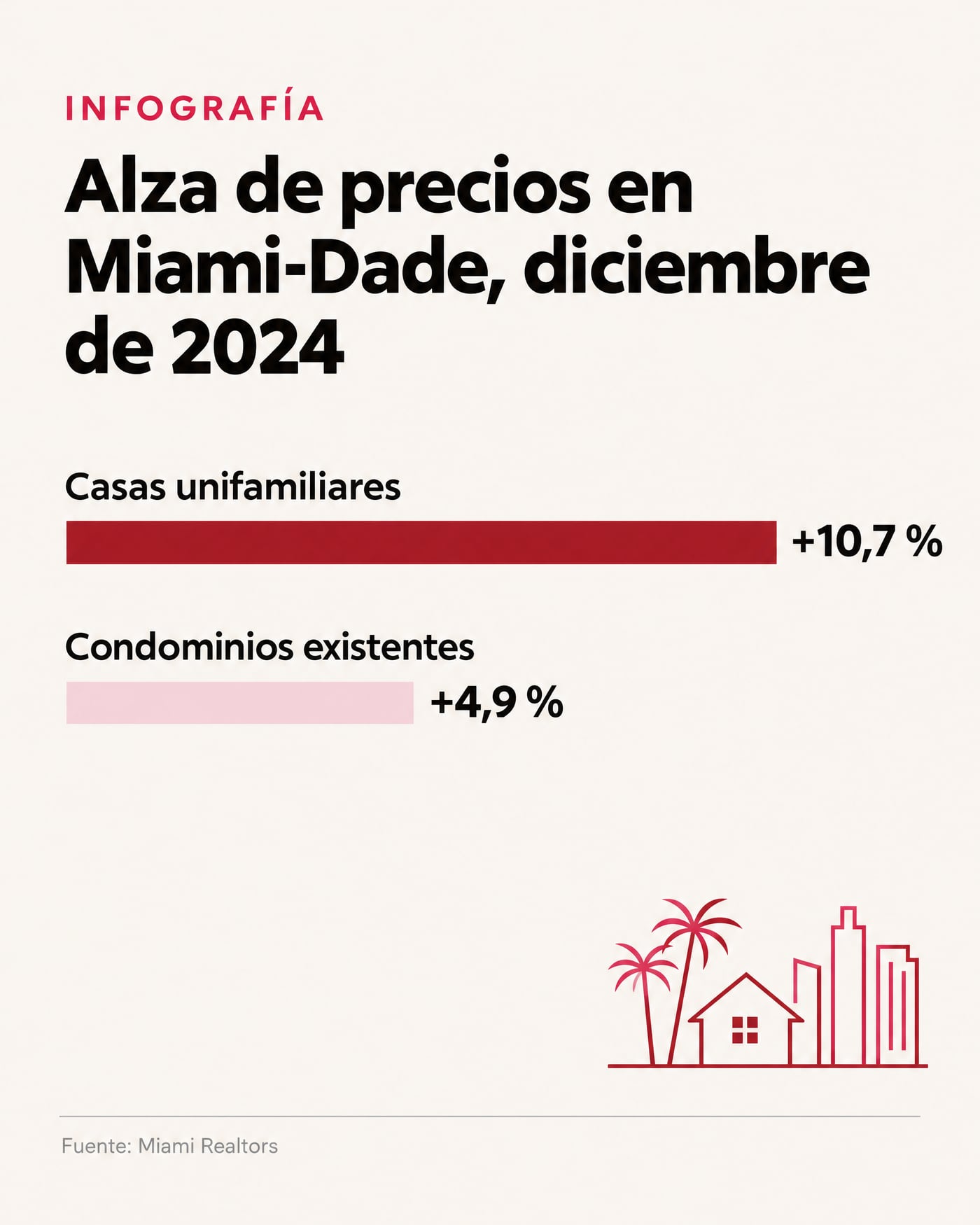
Price increase in Miami-Dade, December 2024
View data in table
| Single-family homes | +10,7 % |
| Existing condominiums | +4,9 % |
Source: Miami Realtors
Why the law changed
The collapse of the Champlain Towers South building in Surfside in June 2021 led Florida to review condominium safety rules. The response was the law known as SB 4-D, passed in 2022, and subsequent reforms like SB 154 of 2023, which clarified deadlines and procedures.
The goal is for buildings to be inspected regularly and for homeowners' associations to save what is necessary for structural repairs, rather than postponing them.
The two main requirements
The first is the milestone inspection: a mandatory structural review when the building turns 30 years old, or 25 if the local authority requires it due to conditions such as proximity to saltwater, and then at regular intervals. It must be conducted by a licensed engineer or architect, or a team under their supervision.
The second is the study of reserves for structural integrity (SIRS), which calculates how much the association must save to repair or replace key elements such as the roof, structure, waterproofing, or installations. The reforms also limited the possibility of waiving these mandatory reserves.
| Requirement | What it consists of |
| Milestone inspection | Structural review at 30 years (or 25 in coastal areas if required by local authority) |
| Who inspects | Licensed engineer or architect |
| SIRS | Reserve study for structural elements |
| Mandatory reserves | The possibility of not funding them was restricted |
| Terms | Extended by SB 154; some deadlines at the end of 2025 and 2026 |
Sources: Greenspoon Marder and Florida Condo & HOA Law Blog. Verify current deadlines.
Deadlines
Deadlines have shifted several times. The original version set December 31, 2024, for many inspections and studies; SB 154 moved several of them to December 31, 2025, and some sources indicate that certain studies coordinated with inspections have until December 31, 2026. Since the rules kept changing, it is advisable to confirm current dates with a lawyer or the state condominium division.
The effect on costs and values
The new obligations increased the management fees of many older buildings, and in some cases generated special assessments for pending repairs. This partly explains why, in December 2024, the median price of existing condominiums in Miami rose 4.9% while that of houses rose 10.7%, according to Miami Realtors.
In the long term, the law aims for safer and better-maintained buildings, which protects property values. In the short term, it increases costs for buildings with deferred maintenance.
What to review in a condominium asset
- Building age and date of its milestone inspection.
- Inspection results and pending repairs.
- Status of the reserve study and the association’s savings level.
- Current fees and approved or planned special assessments.
- Association rules on short-term rentals.
All investments carry risks, including capital loss. The returns of CityFraction assets are estimated and not guaranteed.
Conclusion
Florida’s condominium law made the market safer but also more demanding. To invest in a condominium in Miami, the building’s condition and finances are as important as location and view. Always review this information in the asset’s profile.
Frequently asked questions
What is SB 4-D law?
The Florida law that requires structural milestone inspections and reserve studies for condominiums, passed after the Surfside collapse.
At what age is a building inspected?
At 30 years, or at 25 if the local authority requires it due to conditions such as proximity to the sea.
Can condominium fees increase?
Yes. New mandatory reserves have increased fees in many older buildings.
Fonts
Public data consulted for this item. Figures may be updated after the consultation date.
- 1.Greenspoon Marder: recent changes in Florida condo law · consultado el October 12, 2026
- 2.Florida Condo & HOA Law Blog: inspection and reserve deadlines · consultado el October 12, 2026
- 3.Miami Realtors: Miami-Dade market reports 2024 · consultado el October 12, 2026
Explore open properties
Accommodations with fractions from 50 USD.
Conversation
What do you think of this article?
Educational content. Returns and figures are estimates or illustrative examples and do not constitute advice or guarantee. Read the risk information.